Atlanta — Aug 13, 2026
Half a million visitors flooded into Atlanta this summer for the FIFA World Cup, riding MARTA to Mercedes-Benz Stadium, moving between from Centennial Olympic Park and Centennial Yards, and visiting the Georgia Aquarium and World of Coca-Cola.
They had help finding their destinations.
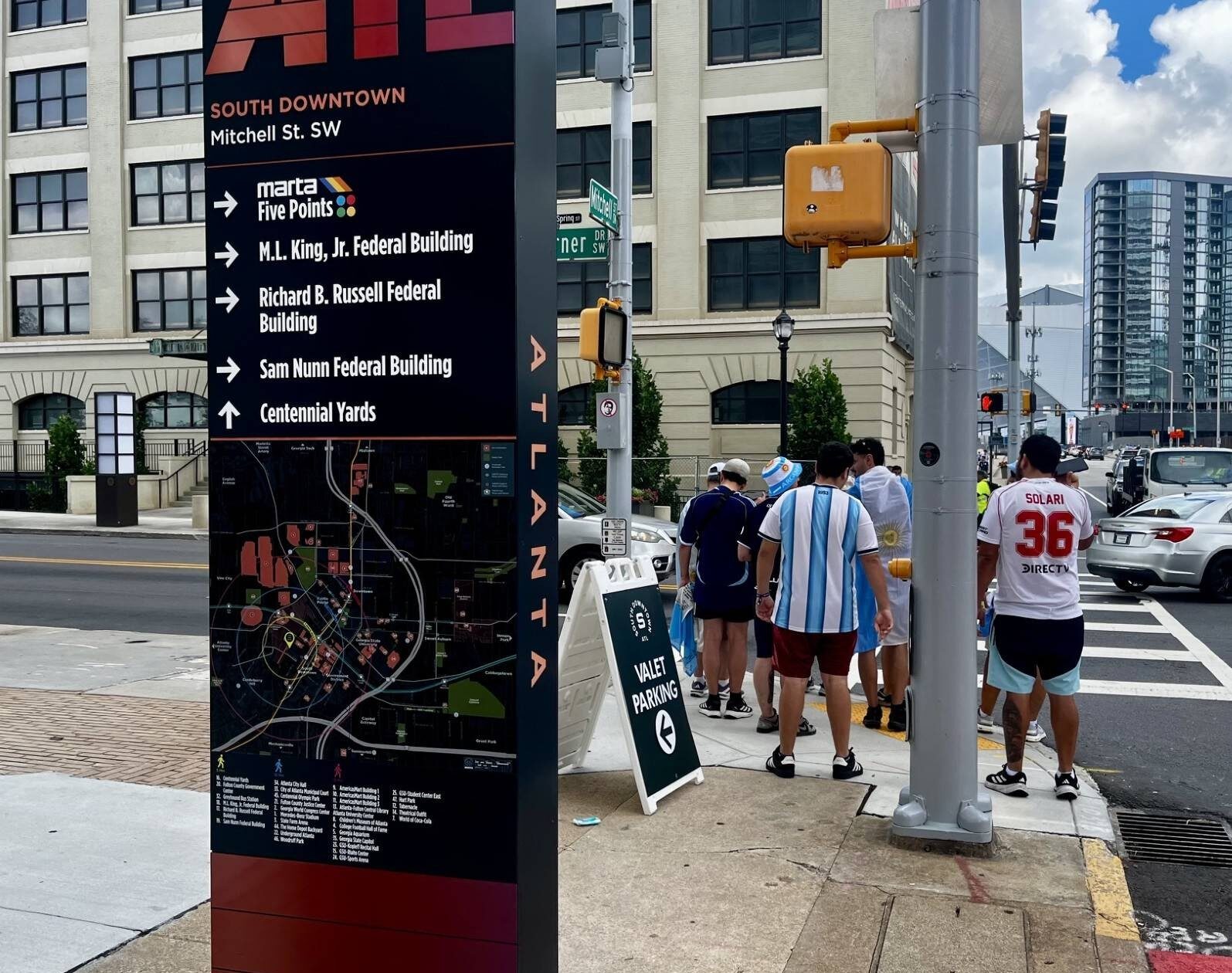
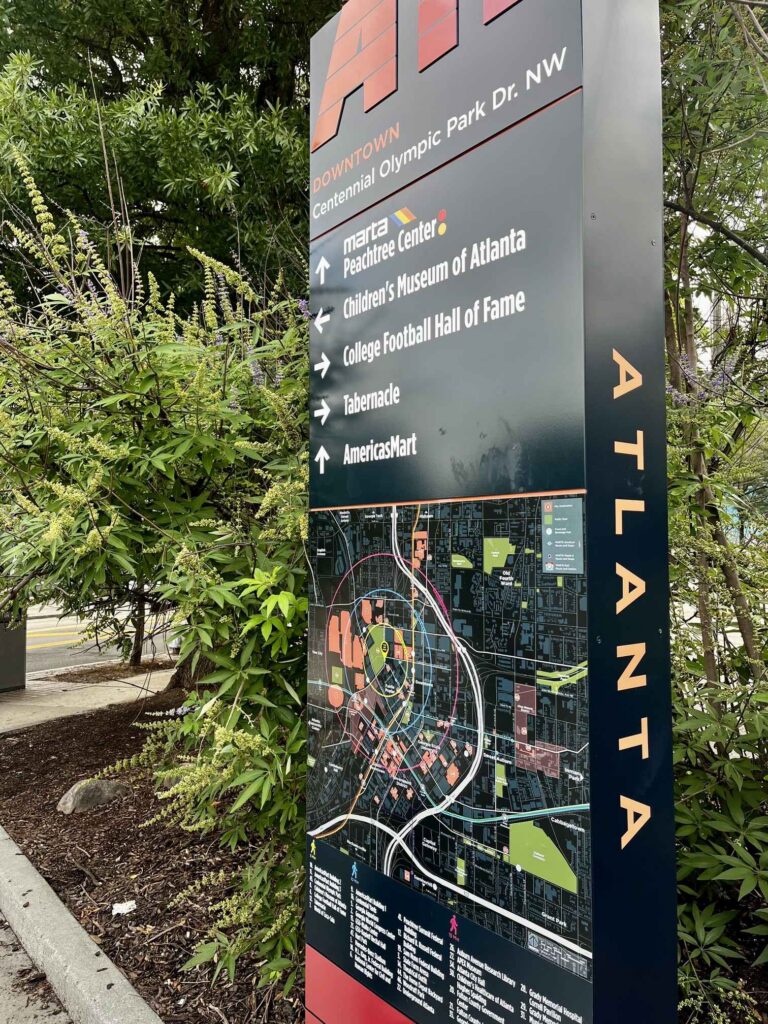
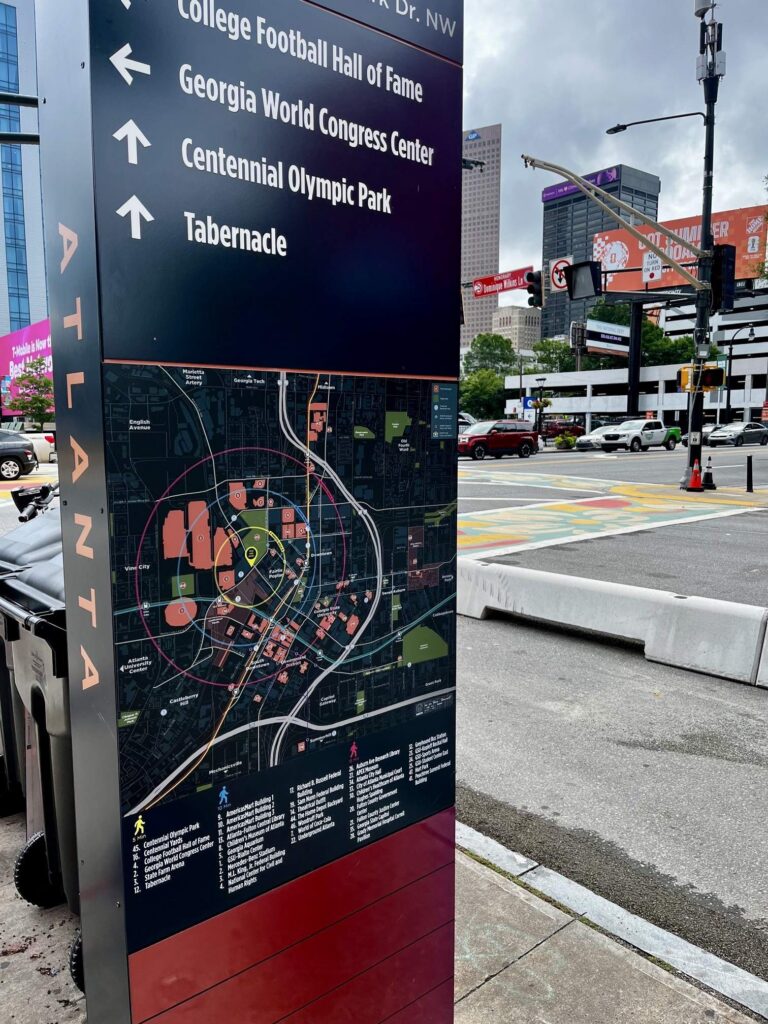
New pedestrian wayfinding signage from the City of Atlanta and the Atlanta Downtown Improvement District (ADID) — developed with a planning grant from the Atlanta Regional Commission’s Livable Centers Initiative (LCI) program — pointed visitors toward attractions, transit stations, restaurants, hotels, and public spaces across downtown.
A bold design
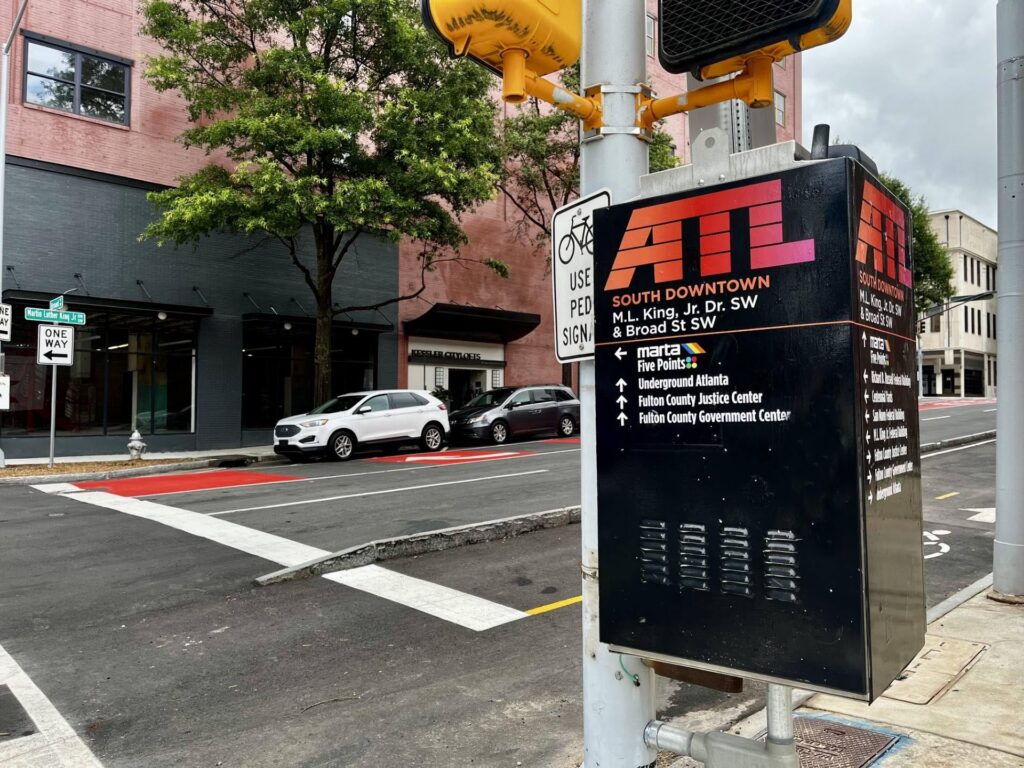
The signs share a bold, consistent visual style designed to stand out. The tallest rise 12.5 feet, featuring distinctive “ATL” lettering, clear directions to nearby destinations, and easy-to-read neighborhood maps. In places where traditional signs weren’t practical, wayfinding has even been wrapped around existing utility boxes, extending the system along key pedestrian routes without adding new street clutter.
The City of Atlanta and ADID, part of Downtown Atlanta Inc., installed 92 signs downtown before the World Cup kicked off in early June. If funding is available, the signs could spread across the city, beyond the downtown area.
Physical wayfinding still matter – even in the smartphone era, planners say. They don’t need a phone signal or battery charge, and no one has to fumble with an app while crossing a busy intersection.
Creating a more walkable downtown
The signage is part of a broader push to make downtown more walkable for locals and visitors alike.
“We wanted to highlight Downtown’s overall walkability,” said Jennifer Ball, Chief Operating Officer at Downtown Atlanta Inc. “Wayfinding isn’t just about helping people get from Point A to Point B. It’s about making people feel comfortable exploring everything downtown has to offer.”
Downtown’s previous wayfinding system had grown outdated and fallen into disrepair. More importantly, it reflected a different era — one designed for both motorists and pedestrians. Most drivers today are using mapping apps for navigation, so there was an opportunity to create a wayfinding system specifically for pedestrians.
Planning Funded Through ARC’s LCI Program
That vision took shape through an ARC LCI planning grant, which funded the project’s early planning and conceptual design. ADID convened downtown stakeholders, event organizers, and public agencies to rethink what wayfinding should look like for a growing, downtown area.
Once the concepts were complete, funding from the City of Atlanta’s Atlanta Urban Redevelopment Agency (AURA) revenue bonds allowed the project to move into final design and installation in partnership with the Atlanta Department of Transportation.
A system designed specifically for Atlanta
Drawing on community input and design work by Perkins & Will, the signs incorporate a typography, color palette, and the familiar “ATL” identity to create a look that’s both functional and unmistakably local.
While the World Cup provided the first major test, the investment will continue paying dividends long after the final match. Residents, conventioneers, concertgoers, sports fans, and first-time visitors will all benefit from a downtown that’s easier to navigate, and more inviting to explore.
For ARC, that’s exactly what the LCI program is designed to accomplish: helping communities turn thoughtful planning into projects that improve quality of life, strengthen local economies, and create more walkable places.