Lawrenceville – Honest Alley Activation

Lawrenceville’s 2023 Honest Alley LCI was a LCI project that advanced the implementation of a priority action identified in its Downtown Master Plan, adopted October 2021. The goal of the study was to create additional connections to destinations within the Downtown. The city recognized Honest Alley as an opportunity to utilize arts and culture to facilitate increased pedestrian activity. The city’s goal was to activate the alleyway into a more lively, beautiful and community centered space for Lawrenceville.
Lawrenceville’s Project Advisory Group (PAG) included local artists, Lawrenceville Arts Commission and youth from the nearby performing arts school, who provided input for creative placemaking elements to add to the Alley Way and input for integrating arts and culture into the functional design of the Alley.
The Cultura Fiesta Latina marked the final public engagement event for the project. The project team utilized the annual festival to activate the alley and engage the public with the final design concepts for the alleyway. This event, celebrating Latino culture, demonstrated the ways that arts and culture can be utilized to activate public space and foster community connection.
Little 5 Points – Arts and Culture Assessment
The CEC team led an Arts and Culture assessment in collaboration with the Little 5 Points CID. The assessment was guided by these goals:
- To create a shared definition of arts and culture in Little 5 Points by capturing the unique arts and culture that already exist.
- To engage with the artists, culture bearers, organizations, and small businesses to take ownership of preserving Little 5 Points’ culture.
- To identify community needs and tools and strategies necessary for preserving Little 5 Points’ culture
Beginning in August 2024, the team researched the history and current culture of the neighborhood, engaged with community members about what is important about Little 5 Points, and brainstormed ideas with community members to preserve L5P’s unique culture when faced with development pressures.
The team collaborated with Little 5 Points community members and CID to create a shared understanding of Little 5 Points’ past, present, and future. The team did this through hosting three 3 collaborative public engagement opportunities for the neighborhood. These were:
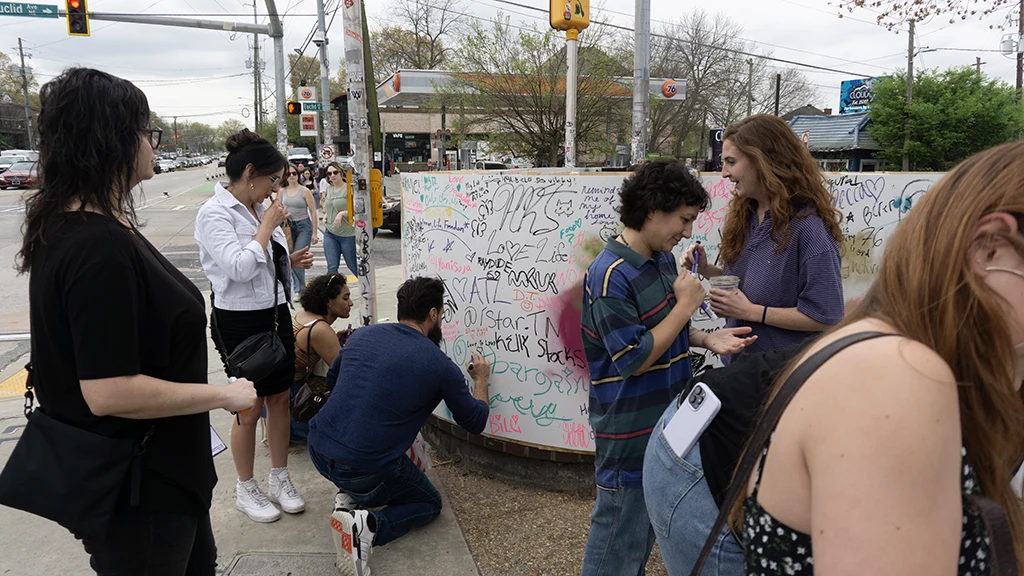
- The Big 5 at Little 5 Festival - Festival goers engaged with a temporary interactive wall by sharing their thoughts on what makes L5P special through the locally relevant art of tagging
- Party With the Past – Attendees engaged with the team’s interactive timeline highlighting the Little 5 Points Community Center and the Little 5 Points neighborhood’s past, present, and future. This was an event hosted in partnership by L5P Community Center, Atlanta History Center, and The Little 5 Points Business Association.
- Little 5 Points Arts + Culture Townhall - The team shared their findings with Community Members representing the 5 key elements of Little 5 Points. Community members engaged in small group activities using interactive zines to think through the role that they can play in shaping L5P long-term displacement strategies
Imagination Station
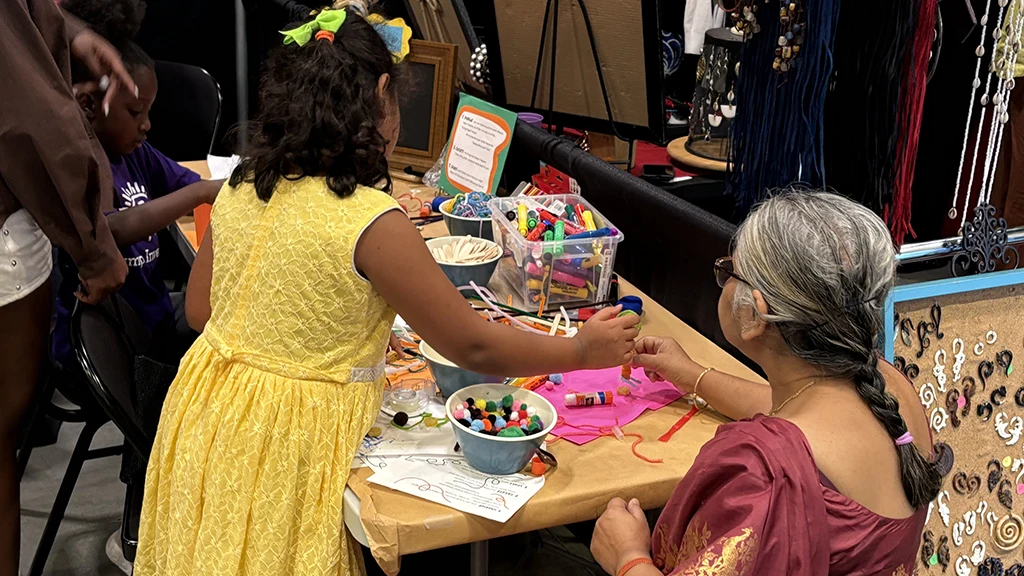
The Imagination Station activity is an arts and crafts-based activity that invites people to use their imagination as an entry point to engage with and document their responses to a question. It’s inspired by play-designer Cas Holman and their practice of asking broader questions to get more honest and interesting results that value the process as much as the answer.
In 2025, ARC’s transportation department set up arts and crafts booths at community events, hosted by metro Atlanta counties, that invited community members to engage with the question “If you could travel around the metro-Atlanta region however you’d like – no rules, no limits – how would you do it?” They were promoted to imagine, create, and share in response to this question.
The self-driven activity took a more interactive approach to ARC’s typical participation in community events. The approach brought a lot more activity, conversation, creativity, and trust into community members’ engagement with ARC. Community members, particularly youth in attendance, were given the space to create and share their thoughts in an accessible way.
Fayetteville Downtown Creative Placemaking
Fayetteville’s 2025 Downtown Creative Placemaking plan was a LCI project that advanced the 2021 Moving Fayetteville Forward LCI study by further refining identified objectives, specifically to develop a Creative Placemaking Strategy for the Downtown Mixed-Use District. The city recognized the need for a cohesive strategy to guide them in establishing an arts AND culture-centered, walkable and livable downtown. The city sought to work with the artist community, business and community members to establish an Arts District
In 2025, the project team engaged in intentional and target outreach to the surrounding Fayetteville community to get an understanding of the community landscape. The team began this by kicking the first project meeting off with a walking tour of the project area. They engaged in intentional outreach and relationship building with businesses, artists, and community members through a series of virtual and community meetings at locations embedded in the Fayetteville community. This included:
- Community Visioning Workshop - A community workshop hosted at 240 Glynn Street, a community coworking space and repurposed building. The workshop invited attendees to engage in interactive activities helped them to think about their vision for Fayetteville’s Downtown, this include “Favorite Memory” postcards, an emoji activity and interactive map
- Community Member Specific Focus Groups
- Artist Focus Group - Hosted at a Community coworking space hosted at 240 Glynn Street, a repurposed building.
- Church St and Lee Street residents – Hosted at Mainstreet business
- Historic Sugarhill residents – Hosted at the local church and co-facilitated with the church pastor.
- Project Advisory Group that included local artists and creative businesses located on Fayetteville’s Main Street district
Blacksville Neighborhood Plan

In 2025, the City of McDonough and community-based organization, Build a Better Blacksville, with the support of ARC and Georgia Conservancy, partnered to create a community-driven plan focused on strengthening the resilience of Blacksville, a historic neighborhood in McDonough, Georgia. Community members have expressed a strong interest in historic preservation, green space development, repurposing vacant spaces, expanding access, and creating gathering spaces. The goal of the project is to create a more livable, connected, and environmentally sustainable Blacksville.
The project team hosted engaged with the community through 3 engagement opportunities:
- Neighborhood Tour - Kickoff meeting held at Community Learning Center along with tour lead by BaBB. The project team engaged in conversation around the neighborhood history and had to the opportunity to view historical pictures and artifacts to understand Blacksville’s neighborhood history
- Annual White Party - The project team leveraged the CBO’s existing annual White Party as a way to introduce community members to the project and as a way to start developing and understanding of how residents view and understand the neighborhood.
- Community Listening Session - A listening session held at Community Learning Center included 6 interactive stations that invited to share their thoughts on topics like historic preservation, visions for Blacksville, Local Artists to potential partner with, and what their role is in the context of the neighborhood.
- Community Block Party - The project team explored ideas for a Community Block Party to get community members excited about the recommendations for the neighborhood plan. Ideas for the block party included an interactive DJ, games, and crafts as a way to get community members to engage with the project implementation recommendations in an accessible way.